Kathmandu is often introduced to travelers through its magnificent temples, ancient stupas, colorful festivals and UNESCO World Heritage Sites. Yet, beyond the bustling squares and centuries-old streets lies another fascinating way to understand Nepal: its museums.
A museum in Kathmandu is rarely just a building filled with old objects. It can be a former royal palace where kings once governed, a beautifully restored courtyard preserving centuries of artistic craftsmanship, a gallery revealing the spiritual symbolism behind Hindu and Buddhist sculptures, or a scientific collection documenting Nepal's extraordinary biodiversity.
Together, these museums tell the story of a civilization shaped by ancient trade routes, powerful kingdoms, religious traditions, skilled artisans, and remarkable natural diversity.
Whether you are a history enthusiast, an architecture lover, an art admirer, or simply a curious traveler, visiting museums can add an entirely new dimension to your holiday in Nepal.
Here are seven museums in Kathmandu and the Kathmandu Valley that deserve your attention, each offering a different perspective on the country's fascinating past and evolving identity.
Located at Chhauni, near Swayambhu, the National Museum of Nepal is one of the country's most important institutions for understanding its historical, artistic, and cultural development.
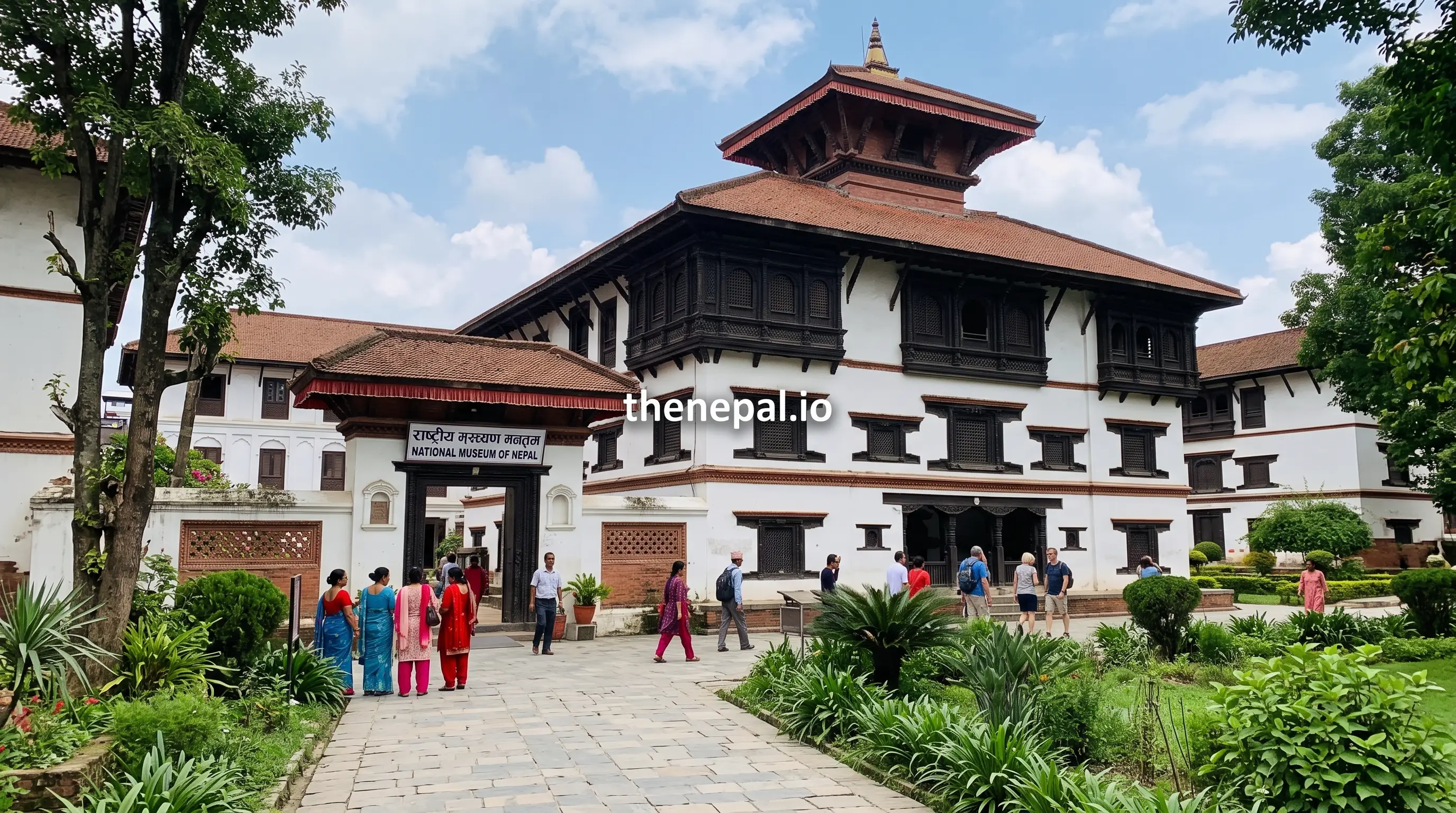
Established in 1928 as the Chhauni Silkhana, the museum was initially associated with the preservation and display of weapons and military collections. It later developed into a national institution showcasing Nepal's wider historical and artistic heritage.
An interesting part of its history is the building itself. The original structure was associated with the residence of Bhimsen Thapa, one of Nepal's most influential prime ministers, remembered for his political leadership and military campaigns during the early nineteenth century.
Today, the museum complex contains several galleries, allowing visitors to explore different aspects of Nepal's past.
The Art Gallery displays traditional sculptures, paintings and woodcarvings. The Buddhist Art Gallery introduces visitors to Nepal's Buddhist artistic traditions, while other collections feature historical weapons, military equipment, coins and archaeological objects.
Among the unusual attractions are historic firearms, traditional weapons and a sword associated with Napoleon III. The collection of ancient coins also offers a glimpse into Nepal's political and economic history, including the monetary traditions of the Licchavi, Malla and Shah periods.
The National Museum is an excellent starting point for understanding Nepal beyond its famous temples and monuments. It provides historical context for the objects, artistic traditions and political developments that visitors encounter throughout the Kathmandu Valley.
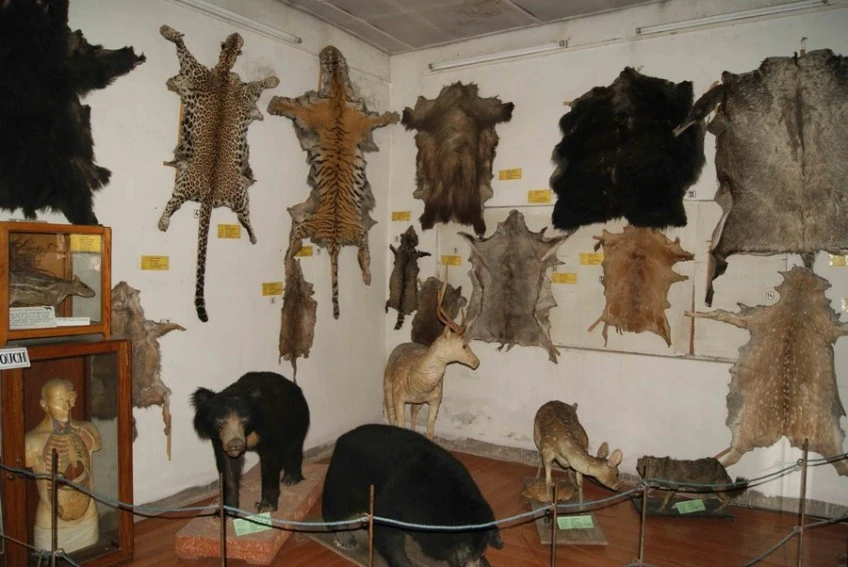
For travelers visiting Swayambhu, combining the National Museum with the nearby Natural History Museum makes an especially interesting half-day cultural and educational experience.
If there is one museum that beautifully connects Nepal's artistic traditions with its living religious culture, it is the Patan Museum.
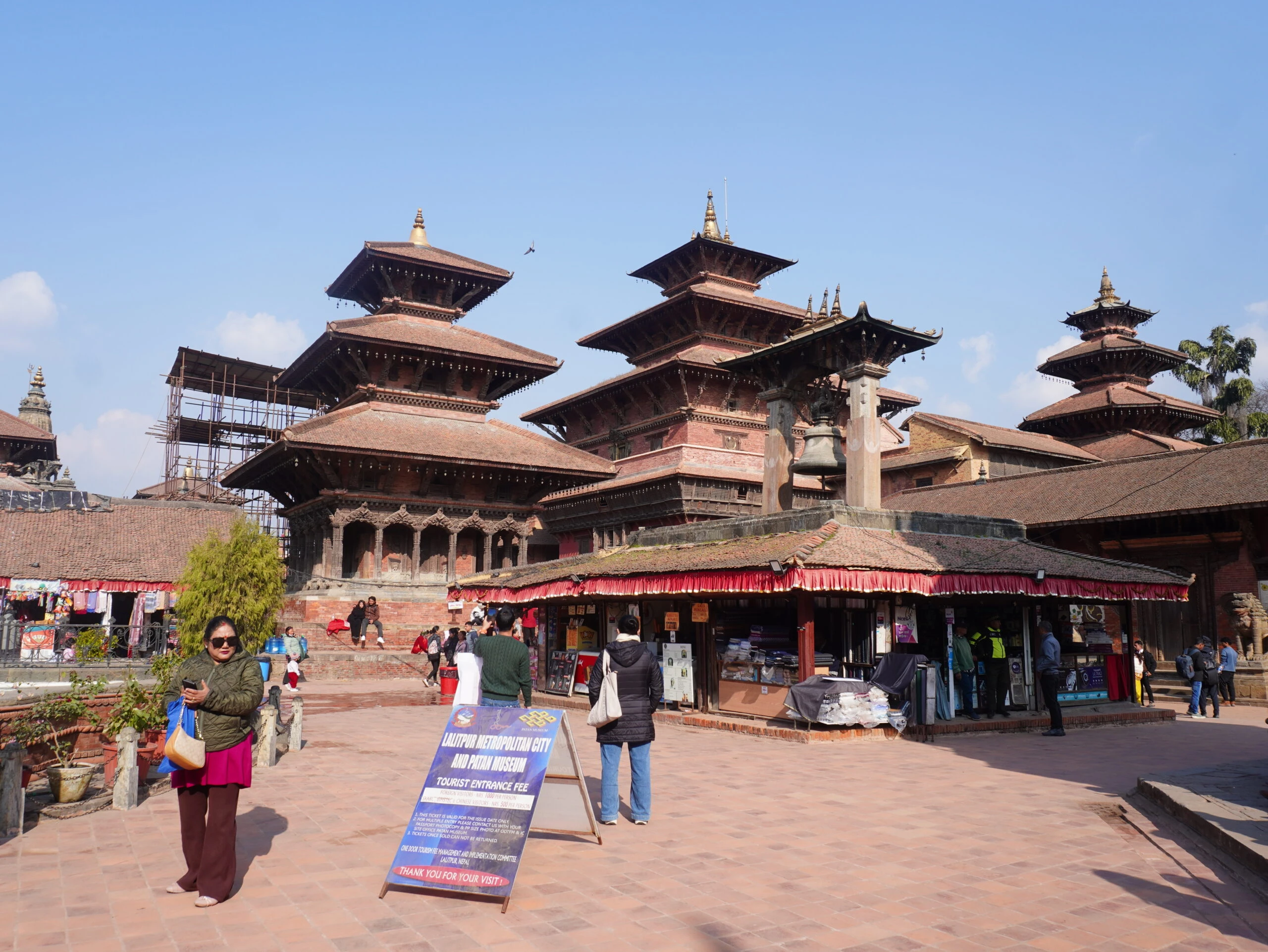
Located inside the historic Patan Durbar Square in Lalitpur, the museum occupies Keshav Narayan Chowk, a former royal palace courtyard dating back to 1734.
The building itself is an important part of the experience. Its traditional Newar architecture, intricate wooden details, brickwork, and beautifully restored courtyard demonstrate the craftsmanship that made the Kathmandu Valley famous.
The museum emerged from an ambitious restoration project involving the governments of Nepal and Austria, supported by international heritage conservation efforts. After years of restoration, it opened to the public in 1997.
Inside, the museum presents an exceptional collection of Hindu and Buddhist sculptures, bronze figures, gilt-copper repoussé works, and other objects that represent centuries of artistic development.
One of the most fascinating aspects is how the exhibits explain the religious and philosophical meanings behind the sculptures.
A figure of Vishnu, Shiva, Buddha or Avalokiteshvara is not merely a beautiful object. Each deity has distinctive attributes, symbolic gestures, ornaments, vehicles and associated stories. Understanding these details helps visitors recognize the deeper meanings of the sculptures they encounter in temples and courtyards throughout Nepal.
Patan has been an important center of traditional metal craftsmanship for generations. The skills used to create sacred bronze images and repoussé artwork continue to be practiced by local artisans.
The museum therefore represents more than a collection of historical objects. It documents a living artistic tradition that remains part of Patan's identity.
Patan Museum is particularly rewarding for travelers interested in Hinduism, Buddhism, traditional art, architecture and Newar civilization.
A guided visit can make a significant difference here. An expert guide can explain the symbolism of religious sculptures, the stories of the deities and the relationship between the museum's collections and the temples surrounding Patan Durbar Square.
In the heart of old Kathmandu stands Hanuman Dhoka Durbar Square, the former royal and ceremonial center of the city.
This historic palace complex is one of the most important places to understand the political history of the Kathmandu Valley. It developed over several centuries, with major contributions from successive Malla and Shah rulers.
The name Hanuman Dhoka comes from the statue of Hanuman, the Hindu monkey deity, standing near the main palace entrance. The statue was installed during the reign of King Pratap Malla in the seventeenth century.
The palace complex contains historic courtyards, temples, ceremonial spaces and beautifully carved wooden architecture. Several sections have been converted into museum galleries dedicated to Nepal's royal history.
The Tribhuvan Museum is particularly significant. It commemorates King Tribhuvan, whose political role was central to the end of the Rana oligarchy and the restoration of the Shah monarchy in 1951.
Other museum displays document the lives of King Mahendra and King Birendra, including their personal belongings, photographs, clothing, gifts, and historical records.
One of the highlights of the palace is Nasal Chowk, a historic courtyard associated with royal ceremonies and important events. The palace also contains architectural details that reveal the artistic achievements of the Newar craftsmen who built and maintained the royal complex.
Beyond the museum galleries, the surrounding Durbar Square is an extraordinary open-air historical landscape. Temples, courtyards, shrines, and traditional buildings remain part of everyday life in Kathmandu.
The square is also home to Kumari Ghar, the residence of Kathmandu's Living Goddess, whose tradition represents a distinctive connection between Hindu and Buddhist religious practices.
Hanuman Dhoka is ideal for travelers who want to understand how Kathmandu evolved as a royal city. It is particularly valuable for learning about the Malla period, the unification of Nepal under Prithvi Narayan Shah and the political changes of the twentieth century.
A guided walk through the palace and the surrounding Durbar Square transforms the visit from simple sightseeing into a journey through the city's history.
For a very different perspective on Nepal's monarchy, visit the Narayanhiti Palace Museum in central Kathmandu.
Unlike Hanuman Dhoka, which reflects centuries of medieval royal history, Narayanhiti introduces visitors to the relatively recent history of the Shah monarchy.
The palace served as the principal royal residence and workplace of Nepal's monarchs. Its present main palace building was designed by American architect Benjamin Polk in the 1960s and completed in 1969. Its architecture combines Nepali design elements with modern international influences.
The palace is organized into several major sections, including Tribhuvan Sadan, Shree Sadan, and the main palace complex. Its rooms and halls were used for official meetings, state ceremonies, royal receptions, and private family activities.
An interesting feature is that the palace has 52 rooms, each named after a district of Nepal. This reflects the idea of representing the country within the royal residence.
The palace became a public museum following Nepal's political transformation and the abolition of the monarchy in 2008. It was inaugurated as a museum in June 2008 and opened to the general public in February 2009.
One of the most historically significant aspects of the site is its association with the 2001 royal massacre, when King Birendra, Queen Aishwarya, and several members of the royal family were killed inside the palace complex.
The event remains one of the most consequential and painful episodes in modern Nepalese history. It profoundly affected the monarchy and the country's subsequent political transformation.
Today, the museum allows visitors to examine the material world of Nepal's former royal institution, from ceremonial rooms and royal furnishings to photographs, gifts, and personal belongings.
Narayanhiti offers an opportunity to understand the final decades of Nepal's monarchy and the country's transition towards a federal democratic republic.
For international visitors, it provides essential context for understanding modern Nepal, its political institutions and the major events that shaped the country during the twentieth and twenty-first centuries.
Nepal's natural heritage is just as fascinating as its cultural heritage. The Natural History Museum at Swayambhu offers an opportunity to explore the remarkable diversity of life found across the country's mountains, forests, wetlands and grasslands.
Established on 17 July 1975 under Tribhuvan University, the museum was created to collect, preserve, document and study Nepal's natural resources.
Its collections include botanical specimens, insects, birds, mammals, reptiles, amphibians, fish, fossils and geological materials.
The insect collection is particularly impressive, with thousands of preserved butterflies, moths, beetles and dragonflies. The Atlas moth, one of the world's largest moths, is among the striking specimens that attract attention.
Bird enthusiasts will find the collection especially interesting. One of its most important specimens is the Spiny Babbler, locally known as Kaande Bhyakur. This bird is endemic to Nepal and is an important symbol of the country's unique avian biodiversity.
The museum also displays specimens of reptiles such as the King Cobra and Python, along with different lizards and crocodilians.
The fossil collection provides another fascinating dimension. A prehistoric elephant skull from the Siwalik region and an ancient hominoid molar tooth identified as belonging to Shivapithecus offer glimpses into the distant history of life.
The botanical displays introduce visitors to Nepal's flowering plants, medicinal plants, mushrooms, mosses, and other plant groups.
The museum's significance goes beyond education. Preserved specimens provide important scientific records that researchers can use to understand biodiversity, species distribution and environmental changes over time.
This museum is especially recommended for nature lovers, birdwatchers, students, researchers and families traveling with children.
It also offers an interesting contrast to the religious and architectural attractions of Swayambhu. While the famous stupa represents Nepal's spiritual heritage, the Natural History Museum introduces visitors to the natural world that makes the country so ecologically remarkable.
Near Boudhanath Stupa, Taragaon Next offers a different museum experience, focusing on architecture, urban history, cultural documentation and contemporary creative practices.
Its history begins in 1968, when the site was initially developed as a hostel associated with the growing presence of international visitors and professionals in Nepal.
The distinctive red-brick buildings were designed by Austrian architect Carl Pruscha, whose work explored the relationship between modern architecture and traditional Nepali building forms.
The site later developed into Taragaon Museum in 2009 and evolved into Taragaon Next in 2023.
One of its most important contributions is the Nepal Architecture Archive, established in 2016. The archive preserves research and documentation relating to Nepal's built heritage.
Its collections include historical photographs, architectural drawings, sketches, maps, urban planning documents, and other materials that help explain how Kathmandu and the wider Himalayan region have changed over time.
The museum's galleries connect architectural history with contemporary interpretation. Rather than presenting the past as something completely separate from the present, they encourage visitors to think about how cities evolve, how traditional buildings are preserved and how modern development affects cultural identity.
Taragaon Next is also a cultural space for exhibitions, lectures, workshops, discussions, and creative collaborations.
Its location near Boudhanath makes it an excellent addition to a cultural exploration of northern Kathmandu.
Taragaon Next is particularly interesting for architecture enthusiasts, photographers, students, artists, and travelers who want to understand Kathmandu beyond its temples and traditional monuments.
It provides a contemporary perspective on Nepal's cultural identity and the challenges of preserving architectural heritage in a rapidly changing city.
Located within the Kathmandu Guest House complex in Thamel, the Museum of Nepali Art, commonly known as MoNA, provides an introduction to the country's traditional and contemporary artistic expressions.
Established by art collector Rajan Sakya and opened in 2020, the museum was created to make important Nepali artworks more accessible to the public.
For centuries, Nepali artists have developed distinctive artistic traditions influenced by Hinduism, Buddhism, regional cultures and international artistic exchanges.
Paubha painting is one of the most remarkable examples. These traditional sacred paintings often depict Buddhist and Hindu deities, mandalas, religious narratives and cosmological concepts.
Nepali art also includes traditional sculpture, metalwork, paubha and thangka paintings, woodcarving and contemporary visual expressions.
MoNA presents works from different generations of Nepali artists, bringing traditional artistic practices into conversation with more recent forms of creative expression.
One of its important objectives is to preserve, document and promote Nepal's artistic heritage while providing opportunities for contemporary artists to reach a wider audience.
The museum also organizes thematic exhibitions, allowing visitors to encounter different interpretations of Nepali art and its changing influences.
MoNA is an excellent stop for visitors staying in or exploring Thamel. It offers a quieter, more reflective experience away from the busy streets, restaurants, and shops.
For travelers interested in art, painting, sculpture, and contemporary culture, it provides an opportunity to appreciate Nepal through the eyes of its artists.
How to explore Kathmandu's museums with an expert local guide
Visiting museums independently can be enjoyable, but understanding the historical and cultural meaning behind the exhibits often requires additional context.
A traditional bronze sculpture, for example, may appear to be an attractive piece of art to an unfamiliar visitor. A knowledgeable guide can explain the deity's identity, its symbolic attributes, the religious tradition behind it, and the artistic techniques used to create it.
Similarly, a visit to Hanuman Dhoka becomes much more meaningful when the stories of the Malla kings, royal ceremonies and the political unification of Nepal are connected to the buildings and courtyards.
At Narayanhiti, understanding the transition from monarchy to republic adds an important historical dimension to the palace visit.
With Gateway Adventure Treks and Expedition, travelers can explore Kathmandu's museums as part of a carefully planned cultural experience.
Our local guides can help you:
Depending on your interests and available time, museum visits can be combined with visits to Kathmandu Durbar Square, Swayambhu, Boudhanath, Patan Durbar Square, and other important cultural attractions.
Whether you prefer a private cultural tour, an architectural exploration or a broader introduction to Nepalese civilization, our team can help arrange an experience suited to your interests.
Kathmandu's museums offer far more than a collection of historical objects. They preserve the stories of kings and kingdoms, the devotion of religious communities, the imagination of artists, the skills of traditional craftsmen, and the natural diversity of the Himalayan landscape.
From the royal courtyards of Hanuman Dhoka to the intricate sculptures of Patan, from the former residence of Nepal's monarchs at Narayanhiti to the biodiversity collections of Swayambhu, every museum reveals another part of Nepal's identity.
The best way to experience these places is to connect what you see inside the museum with what still exists outside its walls.
A sculpture becomes more meaningful when you recognize the same deity in a nearby temple. A historical palace tells a richer story when you understand the political events that took place within it. A traditional painting becomes more fascinating when you learn about the religious philosophy and artistic techniques behind its creation.
Explore Nepal beyond the usual sightseeing routes. Discover its history, understand its culture, and experience its heritage with Gateway Adventure Treks and Expedition.
Contact our team to arrange a personalized Kathmandu museum and heritage tour with an experienced local guide.







© Copyright Gateway Adventure Treks and Expedition Pvt. Ltd., 2026 All Rights Reserved